
















You’ve invested in being there. What do you want people to take away?
Participating in a trade show is a significant commitment. There’s the booth space, flooring, electricity, and setup. Then come flights, hotel rooms, meals, transportation, and time away from your everyday business.
By the time the doors open, you’ve already invested a great deal—before having your first conversation with a prospective customer.

It’s understandable to look for savings. Those expenses add up quickly, and the display can feel like one of the few costs you still have some control over.
Price is easy to compare. Value takes more thought.
When comparing displays, price is right there in front of you. It’s a number you can put into a spreadsheet. Other questions take a little more consideration.
Will someone walking past understand what you do? Is your message relevant to the people you hope to meet? Does your presentation reflect the quality of your work? Can your staff comfortably demonstrate a product or have a useful conversation?
These things are harder to put a price on, but they deserve a place in the decision.
A limited budget can still produce a thoughtful presentation.
Doing trade show marketing well doesn’t require the largest booth or the most elaborate display.
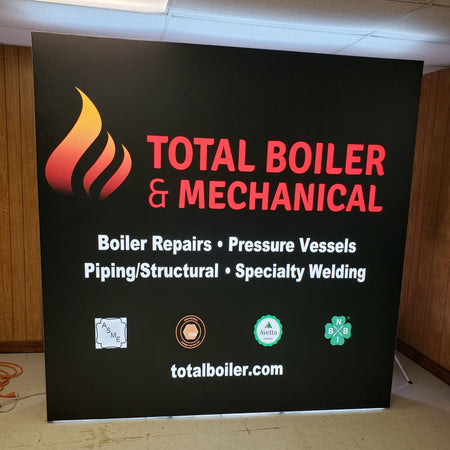
A simple setup can work very well when the message is clear, the graphics are readable, and the space feels welcoming. Sometimes the best improvement is removing clutter, choosing a stronger image, or explaining your offer in fewer words.
An expensive display can miss the mark, too. More square footage and more equipment won’t resolve an unclear message. The goal is to make deliberate choices about what your audience needs to see, understand, and remember.

Does your booth reflect the business behind it?
You may have spent years developing your expertise, improving your products, and earning your customers’ trust.
At a trade show, many people encountering your company won’t know that history. They’ll have your presentation and a brief interaction to help them decide whether to learn more.
Your booth doesn’t need to tell your whole story. But it should give people a fair introduction to the business you’ve built.
Give the display a job to do.
Before choosing a display, consider why you’re exhibiting. Are you introducing a new product? Meeting potential distributors? Demonstrating something that needs to be seen in person? Reconnecting with customers?
Those goals should shape the presentation. A demonstration may need open space and good lighting. A new company may need a particularly clear explanation of what it offers. A business with several services may need to resist giving every service equal space on the backwall.
When you know what the booth needs to accomplish, it becomes easier to decide where to spend—and where you can comfortably save.
Consider the value beyond opening day.
The purchase price is one part of the cost. How often will you use the display? How will it ship? Who will set it up? Can the graphics be updated? Will it work in a different booth size next year?
A lower-priced option may be the right choice for a single event or a business testing a new market. A reusable system may make more sense for a company with a regular show schedule. The right answer depends on how you plan to use it.
The display is one part of the effort.
A thoughtful presentation helps create an opportunity. Your people, preparation, conversations, and follow-up determine what you do with it.
A display can’t promise a successful show. It can help your team show up prepared, communicate clearly, and make good use of the opportunity you’ve paid to create.
That’s why it helps to consider the presentation alongside the rest of your event plan, rather than leaving it as the last purchase after everything else is booked.
Find a balance you can stand behind.
Budgets matter. So does giving your business a fair chance to connect with the right people.
Before settling on a display, ask yourself:
Either way, taking a little time to examine the decision is worthwhile.
You’ve put considerable effort into getting your business to the show. Your presentation deserves a thoughtful place in that investment.